Thursday, August 5, 2010

Planes, Trains, and Automobiles

            
I've gotten a lot of blog mileage from a recent visit back to my hometown of Chicago, so why stop now? Chicago has always been known for great design, architecture, and near miraculous engineering feats - when the river became a bit too stinky, they simply reversed the direction of its flow so it fed to the Mississippi.
Below are a few images I took to capture the city's creative, progressive and dramatic design essence. Some are a bit abstract. Can you identify their origin?


Images from top: (1 and 2) Helmut Jahn's colorful corridor installation at Ohare International Airport. (3) Rooftop of trainport at Union Station. (4) Glass window high-rise along Wacker drive. (5) Drawbridge along the South Loop section of the Chicago River. (6) Steps to the "El" train in the South Loop at Harrison Lasalle Street. (7) Design pattern on ceiling inside Union Station. (8) Great Hall at Union Station. (9) Union Station's grand Art Deco entrance-way. (10) Cars underneath the "El" tracks along Harrison Street.
                 
All images by Douglas DeMers, free to use via cc license 1.0.
Enhanced by Zemanta

Friday, July 30, 2010

Paradise Preserved: The Magnificence of Chicago's Botanic Garden

  
Chicago's greatest urban planner, Daniel Burnham, is famous for saying "make no little plans." And on a recent trip back to the city where I was born and a visit to its world renowned botanic gardens, I realized exactly what he meant.

Located about 20 minutes outside the city, in the north shore suburb of Glencoe, Illinois, the Chicago Botanic Garden is a 385-acre living plant museum situated on nine islands featuring 23 display gardens surrounded by lakes, as well as a prairie and woodlands.

And while Burnham had no connection with its origin, the garden is by no means a "little plan." In fact it is one of the United States' most visited public gardens and a center for learning and scientific research. Each year it has 760,000 visitors. The membership, currently at 50,000, the largest of any U.S. public garden. More than 1,000 volunteers assist with all aspects of the Garden’s mission, from planting and propagating natural areas, to teaching educational programs and staffing public programs and exhibitions. The Chicago Botanic Garden is only one of 10 public gardens accredited by the American Association of Museums, recognizing its living collection of 2.4 million plants.

Chicago's 1893 World Columbian Exhibition.
Owned by the Forest Preserve District of Cook County and managed by the Chicago Horticultural Society, the Chicago Botanic Garden opened to the public in 1972 and is home to the Joseph Regenstein, Jr. School of the Chicago Botanic Garden, offering a classes in plant science, landscape design and gardening arts. The Center for Teaching and Learning brings information on nature and plants to children, teens and teachers. Horticultural Therapy and Community Gardening provide community outreach and service programs. Through the Institutes of Plant Conservation and Ornamental Plant Research, Garden scientists work on plant conservation, research and environmental initiatives.

Specifically, 200 such scientists address threats to endangered flora, train plant conservation leaders and research plant conservation policy. Programs and research focus on the collection, evaluation, introduction and preservation of plants within the context of threats such as climate change, global warming and human impacts.

In 2007, the Chicago Botanic Garden announced plans for a three-phased initiative that would create a 15-acre science campus located at the south end of the Garden. In 2008, the Garden broke ground for a 38,000-square-foot Plant Conservation Science Center, named for Daniel F. and Ada L. Rice. The Rice Center has a sustainable design, with certification at the LEED (Leadership in Energy and Environmental Design) Gold level.

The Center includes a green roof-top garden, seven research labs, an expanded herbarium, a new seed bank area, new classrooms and seminar rooms, twenty offices for research scientists and a public gallery that allows visitors to see behind-the-scenes conservation science at work. A bridge from Evening Island connects the main garden to this new campus.

Fountain alongside a lake.

Visitors are able to see scientists at work in labs, walk to the green roof top garden, and observe the Tall Grass Prairie millennium seed bank. The Rice Plant Conservation Science Center opened in Fall of 2009.

Likewise, the Chicago Botanic Garden was chosen by the United Nations Environment Program (UNEP) as the sole North American host for World Environment Day 2008 with the theme, "CO2 - Kick the Habit! Towards a Low Carbon Economy."

The English Garden.
Japanese House on the Japanese garden's grounds.

On June 5 of each year the Garden and other venues around the world, highlight resources and initiatives that promote low carbon economies and lifestyles, such as improved energy efficiency, alternative energy sources, forest conservation, and eco-friendly consumption.

Art at the Garden
Over thirty non-profit, academic, cultural and environmental organizations participated in the Knowledge and Action Marketplace on the Garden's Esplanade. Displays and representatives discussed products to help green homes, local carpools, volunteer and community conservation programs, classes on green gardening, the use of CFL light bulbs, vehicles that run on used vegetable oil and even appliances that pop popcorn using solar energy.

Organizations participating in the event included the Center for Neighborhood Technology, offering car-sharing information; CNT Energy, working with ComEd to provide information about Watt Spot, a program to assist homeowners who want to pay market price for electricity. Northern Illinois Energy Project, provided free CFL bulbs. Chicago Wilderness and Openlands, provided information about local conservation and restoration programs and Horrigan Urban Forest Products highlighted the best uses for reclaimed wood from urban trees.

Make no little plans? Indeed!--D.A. DeMers

---------------------------------------


Images credits: CBG images by Douglas A. DeMers, free to use under CC license 1.0. Other CBG images via Wikipedia share alike license. Columbian Exhibition image via share alike public domain license.


Visit our other site, Home Science, for advice on home energy efficiency tips.

Enhanced by Zemanta

Friday, July 23, 2010

Splendor in the Grass


A few of my recent posts have been a tad bleak, noted by grim topics about tough economic times and pressing environmental issues. A friend mentioned that even listening to Joy Division songs cheered him up after the reads...

So let us take a little summer break. Let us free our minds and go to a soft, fuzzy place. I'm imagining a 70's style movie clip - a close-up of a sun drenched daisy field, followed by a zoom to a mod-styled Jane Birkin and Serge Gainsbourg strolling gently in the distance to the sounds of easy grooves. Then later in the evening, glasses of Riunti wine are clinking in front of a glowing fireplace, shag rug and all.

Fast-forward a few decades and you'll get that same hip, fuzzy feeling at Grasshopper, a fabulous chic boutique near Philadelphia's Old City area, with all the latest fashions for the new generation of Jane Birkins and Serge Gainsbourgs.

Grasshopper Boutique
The stylish apparel and accessory shop, which is in its 4th year of operation, is the creation of Tracy Lutz and Regina Louise, two young ladies with an amazingly keen and playful fashion sense.

In addition to offering forefront designs from labels around the globe, the shop also features items from an assortment of talented local designers and fashion artists, such as Magic Outlaw apparel by a team of young entrepreneurs at Philadelphia's own Outlaw Printing Company.

Buying from area vendors, or being a locasumer, not only helps the local economy, but can be another small way to cut down on carbon emissions and help the planet (see my post The Art and Soul of Philly). It also puts you at ease knowing that your clothing wasn't the output of some slavish sweat-shop somewhere overseas.

Both Tracy and Regina both met while working at a swank t-shirt design company here in Philadelphia, and though neither were of formal fashion design education - albeit Tracy already had experience in the industry as a fashion model, and Regina worked in the design department at fashion-loaded Urban Outfitters, which is headquartered in Philadelphia - they shared an intuition for style and love of clothes, and decided that opening their own "supertique" would be an ultimate fantasy come true.

Much of their inspiration can be found at their visually dazzling blog Come Spy With Me. But be careful, you may be forever lured into an intriguing world of fashion espionage.

The two ladies also seem to have an uncanny eye for interior design, especially 70's style, evidenced by the hard work they've done on the store's great decor. The walls are decorated with colorful mylar floral and photo prints, the crystal lighting fixtures give a neo-baroque sense of elegance, and the lipstick red metal fireplace and bearskin rug near the dressing rooms adds sexiness and warmth, literally - the wood-burner is their main heat source.

Cheers!
Tracy says she loves to collect items from the '70's because it reminds her of childhood and that she feels like it was a fun decade. She has wonderfully decorated the walls of the store with the numerous super-groovy paintings and drawings of the era that she has collected throughout the years. It gives the space a very personable, but hip feel.

"I didn't want this to be just another vanilla box," she says, referring to standard white-walled boutiques and galleries that house clothes and art. "I wanted the space itself to be art."

Based on the looks of their Grasshopper Boutique, they've made that happen in a fun and beautiful way.--D.A. DeMers.


Ballade de Melody Nelson. Classic hit song by Serge Gainsbourg.


--------------------------------------


Grasshopper co-owner Tracy Lutz.

Cozy mod.

Grasshopper's interior with vintage owl wall art.

Grasshopper's interior - vintage photo wallpaper

Accessorize yourself!

A celebration last year at Grasshopper's 3'd anniversary.


Note: This article is an update from my earlier post last September.


Coming soon to designer in exile - the magnificent landscape design of Chicago's Botanic Gardens. Would Daniel Burnham be proud? And be sure to visit my new site, Home Science, for professional energy saving advice on your digs.


Enhanced by Zemanta

Tuesday, July 20, 2010

Dwelling On Sprucing Your Dwelling? Thrifty Tips.


Decorating on a budget.
The conventional wisdom that apartments should be minimal, temporary-looking spaces is in no way an absolute - they can easily be made to have the feel of a well lived-in home. Apartment living is a great way to save money and allow for freedom of mobility. Sprucing up your abode cheaply will brighten your mood when you have guests, or simply let you enjoy it better on your own. Here are some ideas and resources to help decorate your apartment nicely on a budget, while also reducing your negative impact on the environment.

Sales and collecting: Yard, garage, and discount stores are the best place to find home furnishings for cheap. Furniture, wall art, and storage items don’t need to be bought brand new. You can find beds and couches and revive them with mattress covers and slip covers. Décor doesn’t even have to be purchased. Do you collect classic vinyl records, movie posters or have a collection of vintage bottles? Why not use them as décor in your apartment? Put them on display walls, in shadow boxes, or on a shelf to bring instant personalized home furnishings to your apartment. You will be surprised how collections can be an innovative focal point for a room.

A friend of my wife was on the Today Show this morning because she represents ranks of people called "hoarders." A lot of Americans seem to be holding on to sentimental things more today than ever, and not necessarily as the result of some newly declared nationwide neurosis. I use more sensitive sounding terms like "enthusiast," or "preservationist," or "collector" to describe them, especially since I'm married to one.

Websites and classifieds: Websites like Craigslist, Backpages, and other free online classifieds are a great resource for finding home furnishings. Not everybody can hold on to belongings these days. People are often moving out of their homes and need to get rid of items fast and cheaply. Here in Philly, one can find online "swap" groups like Philly Freecycle, which is part of a nationwide Freecycle Network started in Tucson in 2003 to promote waste reduction in Tucson's downtown and help save desert landscape from being taken over by landfills.

Other resources such as Estate sales are published in online classifieds as well. Estate sales often sell items from someone who has passed away, but they can also be from those who can no longer financially afford their belongings. Take advantage of these because you may discover one of a kind bargains.

The diy planet: It's quite likely that you and some friends may be able to assemble anything you put your mind to. Do it yourself tables, chairs, and entertainment centers can save you money. Ikea, for example, has décor and storage ideas for every budget, and every assembly skill level. They also claim to be eco-friendly because they use a certain amount of recycled materials and less toxic binding agents.

But if you're truly interested in saving the planet's dwindling resources, keep in mind that it requires energy to recycle, so the idea that a cheap, toss-away, recycling culture will get us all off the hook from further degradation of our environment is somewhat misleading. Recycling is good, but Re-use, re-appropriation, and swap is my recommendation, whenever possible. I often shop for antiques, vintage pieces or go to thrift stores, I bring my own re-usable cup to the coffee shop, and use an aluminum water bottle over recyclable/disposable plastic ones... Perhaps, someday, we'll see the return of the milkman and his refilled glass bottles at our doorstep, just like on Leave It To Beaver.

Nicely balanced palette of blues, browns, and neutrals.
To acquire pre-owned furniture, vintage shops like Vintage Modern here in Philadelphia offer a great assortment of quality home furnishings that haven't hit the often pricey 100-year antique mark.

If you prefer something new and can afford more than the Ikea variety, consider investing in furniture that will last for generations - I still utilize my father's beautifully crafted, hand-me-down Eames era desk from the 1950's. Places like Pompanoosuc Mills with its local showroom in Manayunk are great examples of new, built-to-last furniture - and their prices are not off the charts. They make good solid wood pieces, custom made from Vermont Forest Stewardship Council wood sources. They've been at it since 1973, and green before the term was ever conceived as a marketing ploy.     

Add and coordinate color: A fresh, nicely thought out color scheme is likely to give to the most prominent indication that you've done a makeover. Adding color to your apartment with bed and bath accessories can change the atmosphere immediately. Coordinating bed linens, curtains, and an area rug can pull together a dull space with minimal effort and expense. Matching towels, bath rugs, and shower curtains will help you feel and look good in your bathroom.

Ikea space saver.
Efficient use of space: If you're downsizing from a larger space, or taking on guests - a reality of these tough economic times - there are several ways to help make the best use of those spaces. Loft beds are a cheap way to accommodate several people in a small space. Loft beds are reminiscent of bunk beds, which take advantage of vertical space. The items can be bought at furniture stores, garage sales, or check college dorm and apartment bulletin boards for quick sales. Even if you don’t have a lot of people in your apartment, the beds can be utilized to straddle a desk area beneath to save valuable space in your bedroom.

Under-bed storage and multi-purpose furniture, such as sofa-beds, or coffee tables that expand and convert into office desks, with filing chambers and more, are great for small space situations. And many of these can be found at affordable stores such as Ikea. A nice series of convertible coffee table/desks is sold through local American Signature Furniture stores.

Likewise, while visiting my mother recently in Chicago at her quaint, efficient condo, she demonstrated how her sunlit kitchen table could easily become an improvised office desk, when needed. This I found especially beneficial because it allows natural light onto the workspace, and brings the office into a generally uplifting environment - the hearth. It also solves the problem of her traditional office desk, as beautiful a piece of Chippendale style furniture you could imagine, from facing a blank wall. She prefers the kitchen table instead because it allows for a variety of seating focal points from which to choose.

There was a time when designers often drew distinct boundaries between eating, sleeping, and work environments. To some degree, events of the last few years have made us rethink those psychological aspects of space planning and proxemics - at least I have.

With the use of the right resources for quality items one can decorate an apartment without having to peel off a lot of Ben Franklins. There is always someone moving in and out of apartments and homes, perhaps more so than ever. These tough times have created many money saving opportunities and resources, as ironic as that might sound. You might as well make use of them to help your wallet and help the environment at the same time.--D.A. DeMers


Coming soon to designer in exile - the magnificent landscape design of Chicago's Botanic Gardens. Would Daniel Burnham be proud? 

And be sure to visit my new site, Home Science, for professional energy saving advice on your digs.


---------------------


Image credits: Top dining room, share alike license, owner does not necessarily share opinions on this page. Classifieds, share alike license. Craft room, share alike license, owner does not necessarily share opinions on this page. Contemporary room, share alike license. Loft bed, share alike license. Ikea, share alike license. Eco-smart dining table, share alike license.

Enhanced by Zemanta

Tuesday, July 13, 2010

America's Greenest Ballpark


Image: Wikipedia

I've often wondered which major league baseball team has the most environmentally friendly ballpark. When it comes to being green, a stadium like the Cub's Wrigley Field seems like the most vividly environmental-looking, with its vast wall of green vines.

I grew up in Chicago, but was a fan of the White Sox, a team, incidentally, that tied the Yankees for having the best post season record in history during their amazing 2005 World Series run. The vines of Wrigley mean little more to me than an overly manicured quaint North Side hedge.

Real ecologically minded stadium design, of course, runs much deeper. It involves lighting, recycling, water usage and eco-smart building materials, as well as good access to mass transit.

So which team gets the vote for having America's greenest ballpark? The winner is, to my surprise, the White Sox's division arch rivals the Minnesota Twins. According to an article in the Star Tribune and the green-building blog Suite 101, Target Field, the Minnesota Twins' new baseball stadium, received a LEED silver rating, certifying it as the greenest ballpark in America.

LEED (Leaders in Energy and Environmental Design) is a certification system developed by the U.S. Green Building Council. The rating levels include certified, silver, gold, and platinum. The certification is based on many facets of sustainability, including energy saving, carbon dioxide emission reduction, water saving, and indoor air quality.

Pre-traded J. Werth, Citizens Bank Park. 

Specifically, the designers of Target Field endeavored to create water saving features in the park. Target Field's grass is irrigated with recycled rainwater. An underground system collects and treats rainwater and prepares it for use on the field. This system potentially saves two million gallons of water annually. Likewise, all urinals and toilets in the stadium are low flow, and restroom fixtures at the park use 30 percent less water than traditional ones.

Target Field saves energy by utilizing waste energy from the Hennepin Energy Resource Center to heat most of its indoor spaces and the field. The park uses energy-efficient lighting to illuminate the field and has a power purchase agreement to to make for 70 percent of its energy consumption over a two-year period. The stadium also provides a number of convenient recycling bins.

Not only is the finished product green, but so were the construction methods used to build the stadium. Contaminated soil on the construction site was treated and returned to the ground. Issues with waterway contamination, soil erosion, and dust were mitigated and controlled during the construction process.

Most construction waste was diverted or recycled, and many materials used in construction were made from recycled content. Many of the resources used came from local or nearby sources, including the Mankato, Minnesota limestone which makes up most of the stadium's exterior.

The Twins organization also teamed up with the Minnesota Department of Natural Resources so that each time a Twins pitcher breaks an opponent's bat, 100 trees are planted in Minnesota parks. Minnesota's baseball team has built a new model for baseball stadiums across the country by showing dedication and concern for the environment.

These achievements all indicate a tremendous leap forward for the green-building movement. But the Twins aren't the only team that's seeing the benefits of sustainable stadium design.

Since I moved to Philadelphia in 2007, it was only a matter of time before I'd be swept by Phillies fever as the team slugged away like Rocky through the miraculous 2008 championship season and beyond. Thus, I've grown increasingly curious - how green is my newly adopted team? As it turns out, the Phillies are near the top of the list.

Home run?
Recycling pick-ups between innings.

The Phillies are the first Major League Baseball team to join the Environmental Protection Agency's Green Power Partnership Program which motivates organizations across the world to purchase green power in order to minimize environmental impact. They announced on April 30, 2008 that their home field, Citizens Bank Park, would  be powered with 20 million kilowatt hours of green energy purchased in Green-e Energy Certified Renewable Certificates.

The EPA stated that this purchase holds the record in professional sports for the largest purchase of 100% renewable energy. Likewise, the Phils are among the top three purchasers of green power in Philadelphia.

Aramark Corporation is the Phillies food and beverage provider at Citizens Bank Park and they are taking major actions in improving the environmental impact of the Phillies stadium. Glass, cardboard, and plastics  used during game day are recycled; frying oil is being recycled to produce bio-diesel fuel, and biodegradable, recyclable, and compostable products, serviceware, and plastics have been introduced.

My dog Betsy is a Phillies superfan.

So if you ask me, my vote goes to the Phils for scoring big on every measure. Not only do they have one one of the nation's most environmentally friendly ballparks, it's architecturally pleasant and comfortable (voted 4th best by MLB in 2007), and very accessible for suburban and city folks alike. 

They also have a great team.--D.A. DeMers.

------------------------

Image credits: Target Field, cc license 2.0, owner does not necessarily share opinions expressed on this page. All others by D.A. DeMers, and free to use under cc license 2.0. Read more at Suite101: Target Field: Greenest Baseball Field in America.

Enhanced by Zemanta

Saturday, July 10, 2010

Dreams of a Mad Scientist

 
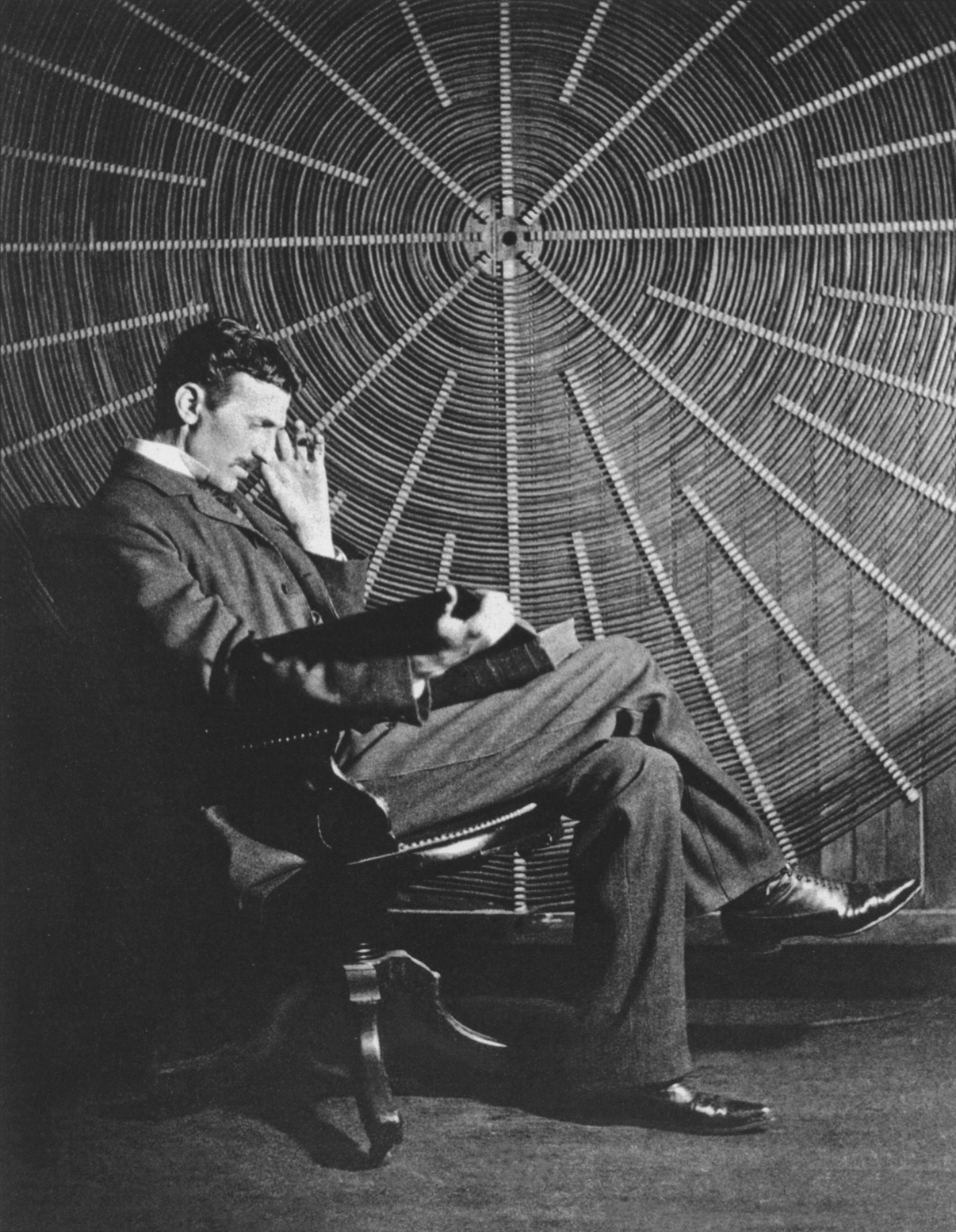
This weekend in Philadelphia, the Tesla Science Foundation is hosting its annual Nikola Tesla Energy Independence Celebration to commemorate the birthday of the influential inventor and his prolific contributions to science and technology. The event, according the foundation's press release, brings together scientists, inventors and enthusiasts for a three-day conference themed to highlight the need for a new energy paradigm.


Tesla turbine system


Tesla was a visionary inventor who lived during the turn of the 20th century. His achievements include the the discovery and development of radio, his experimentation with radiant energy of "invisible" kinds (later named X-rays), establishing the principles of frequency and power level for the first primitive radar units, the implementation of alternating current and the AC motor, wireless technology, and many other significant inventions that are commonplace aspects of the modern age.

Though ultimately stymied by jealous competing inventors and tyranical big business adversaries, Tesla's ideas have endured to the present day, perhaps being more relevant now than ever - especially his dream to bring clean, free energy to the world through advanced wireless technologies and similar concepts.

His extraordinary discoveries and designs related to this field are currently being utilized and researched by many scientists throughout the world, from electro-magnetic wave energy sources to wind turbine construction.

The greatness of his work, done with the betterment of humanity in mind, contrasts starkly with his own tragic personal life story, one of eventual isolation and exile from the world.


Tesla turbine.

Tesla alternating current motor.


The convention kicked off with a celebration "bash" Friday night at Philadelphia's Independence Center, a fitting site for the conference's "energy independence" theme. Lectures and other activities will be featured throughout the weekend at various locations, including a series of speaker forums at the Free Library of Philadelphia (no charge), a reception and dinner at Arch Street Meeting House ($20), and the official Tesla Foundation Conference at Two Liberty Place ($110 entrance fee). More info can be found at the Tesla Science Foundation website.--D.A. DeMers. 


Film short: Nikola Tesla - A Tribute to the Forgotten Wizard.
Enhanced by Zemanta