Showing posts with label Energy conservation. Show all posts

Monday, March 14, 2011

The Good Lands of Liberty

      
Childrens garden at Liberty Lands Park
It’s hard to tell that the two acre parcel that is now Liberty Lands Park was once an industrial brownfield. And it's hard to believe that the surrounding Northern Liberties community used to be one of the only neighborhoods in Philadelphia without a public green space. Liberty Lands is now a vibrant, essential part of that community, and a symbol of what resourceful neighbors can do with a few shovels, some environmental know-how, and a commitment to making their community a better place.

What is now a park, community garden, playground and state-of-the-art model for water management was once the Burk Brothers Tannery. This former brownfield or contaminated land was made safe and usable after the hazardous materials were removed by the Environmental Protection Agency in 1987.

Image via Wikipedia
After the pollution from the tannery was cleaned up and the contaminated materials were subtracted, biosolids, or nutrient-rich organic materials that are a bi-product from treatment of sewage at water treatment facilities, were used to improve the quality of the land. Biosolids act as a natural fertilizer, enabling the soil to retain more water and nutrients and made it possible for the growth of a community garden, an herb garden, and the more than 180 trees that the park now features.

In 1995, a development company planned to convert the land into loft apartments. When the deal fell through, the land was donated to Northern Liberties Neighborhood Association (NLNA). Since the community didn’t have a green space, neighbors envisioned and created designs for a park. In 1996, the NLNA and the project received funding from the Philadelphia Urban Resources Project.

A world of fun for kids and adults at Liberty Lands.

Our dog Betsy explores the park on a winter day.


By the spring of 1997, with the help of other generous donations and volunteer labor, Liberty Lands was born. The park now has partnerships with Philadelphia Urban Resources Project, the Philadelphia Horticulture Society (PHS), Philadelphia Water Department, PA-DEP, TreeVitalize, and the Philadelphia Mural Arts Program.

More recently, the park was selected for a storm water management project. The PHS designed the project and was funded by Philadelphia Water Department/PA-DEP with the aim of easing loads on local waste water systems. Additional community support has funded the instillation of a cistern that will allow for water efficiency and conservation as water will be diverted towards irrigation.

The storm water management system establishes methods that could be utilized across the city and once again demonstrates how Liberty Lands is a model of a sustainable green space and an excellent example of grassroots community building.--A.C. Johnson.

-------------


A Few Words with Liberty Lands Park Coordinator Liz Reed

Many people have pitched in to turn the Northern Liberties lots into a green space. Among them is park coordinator Liz Long Reed. She and her husband William Reed, co-owner of the popular restaurant, pub, and entertainment venues The Standard Tap and Johnny Brenda's, have a great history putting together fun events at the park. Designer In Exile recently chatted with Liz about her related experiences: 


What do you think is the single most significant function of Liberty Lands?

I think the thing that makes Liberty Lands special is that it is versatile. It's lots of things to lots of people. Even with the addition of the stage and rain garden, we purposely thought about how it would be used when there wasn't a major music or rain event going on. We want people to explore and hang out in that area.

What, if anything, has been the biggest hindrance in making Liberty Lands what it is today?

I suppose that would be lack of funds. Regardless, I think we make the most of our time and our volunteers to keep the park safe and looking its best.

What is your favorite part of the park?

That would have to be where I get to sit back and just enjoy it with my neighbors. A close second is that we own it. If we find the ways and the means to make stuff happen, we can do what we want. Like today, my husband/dedicated park volunteer went out with three extension cords and a giant drill to fix a planter that some enthusiastic bunch tipped over and broke last year. Our neighbor will meet him later in the week with his bobcat to pick the heavy top up and place it so it can be re-cemented in place. It's our park, so we can be as creative with our time and energies as we see fit.  It's like a big common back yard.

Does the Northern Liberties Neighborhood Association have any new plans in store for the park or any other other green spaces in the area?

Yes to both. We hope to build a "potty shed." A neighbor designed it to house a port-a-potty on one side and a tool shed on the other. The idea is that people then can pay an annual fee to get the combo to use the toilet, and the fees cover the maintenance contract. If, for whatever reason, it doesn't work out, then we end up with one big shed.

In addition, the NLNA got a grant to green the area from 2nd Street to Delaware Avenue along Spring Garden Street. This includes planting 50 trees on April 17th. And the Philadelphia Water Department and Philadelphia Horticulture Society have started revamping the Dough-boy pocket park at 2nd and Spring Garden as we speak. It will include new storm-water amenities.

-------------


The Community Gardens of Fishtown
A guerrilla photo essay of guerrilla gardens.

Last summer I took a little stroll with my camera in search of community gardens in our Fishtown neighborhood of Philadelphia. Fishtown is one of the city's oldest areas, and is located only blocks away from the Northern Liberties community mentioned in the articles above. Residents here help beautify their surroundings by taking part in various community diy or guerrilla gardening efforts. Below are pictures of cool stuff I found.--D.A. DeMers.

Neighbors turned this vacant lot into something special.


A local church group put a handy green thumb to this space.


Artisans and gardeners worked together to make this spot extraordinary.

And where there are no green spaces available, we create murals of them!


Enhanced by Zemanta

Saturday, January 15, 2011

The Tiny House of the Father, Son, and the Holy Ghost Revisited

       
Being from a sprawling mid-western city, I had never seen anything quite like this before. It was as if I'd walked into a mini doll house. The ground floor had one tiny room. A steep, twisting staircase led up one floor to another tiny room and bathroom, and the staircase led up again to a bedroom. Metal pulls had been installed to help hoist oneself up to each level, as if aboard a submarine. "It's your basic trinity house,” the realtor said. Apparently, this was a uniquely Philadelphia invention.

The locals also call them Father, Son, and Holy Ghost houses.

Philadelphia of the mid-18th century was in an age of an economic boom. As noted on the website of the Independence Hall Association, "artisans and small manufacturers were needed to supply goods and services to a growing population. Those considered to be artisans included cabinetmakers, silversmiths, pewterers, glass blowers, and wagon builders. As the dwellings in center city were owned by prosperous merchants and land speculators, the artisan middle class congregated in enclaves to the north by the (Delaware) river. They prospered with the growth of the city."  Read More...

-------------------


Home Energy: A Turning Point

Image via Wikipedia
The need to save energy is a notion everyone seems to agree is important these days. Whether you're short, tall, wealthy, poor, liberal, conservative, pink, green, or purple - the idea that you might be burning up dollars for no reason strikes a common nerve.

That's why it's comforting to know that professional guidance for the power to save has come to the Philadelphia region in the form of EnergyWorks, a comprehensive energy solutions program for home and commercial or industrial building owners. EnergyWorks experts help owners find ways to reduce their building’s energy use, and EnergyWorks’ low-interest loans help them pay for the upgrade.

At Energywise PA, a site sponsored by the new Keystone Energy Efficiency Alliance, Deputy Philadelphia Mayor Alan Greenberger describes the program as follows:

"EnergyWorks pays to send auditors to a home or business to pinpoint specific changes that can save energy and money. [For example], say I have a big house in Mount Airy and, even though I'm an architect, I can actually think of 10 things to do, but I don't know which one is the most bang for the buck."

Many homeowners can get a $400 energy audit and only pay $100 for it. Likewise, low-interest loans are available for improvements. The $25 million program is available in Philadelphia, Bucks, Chester, Delaware, and Montgomery counties.

Last month Philadelphia Mayor Michael Nutter and Campus Apartments CEO David Adelman announced the first full commercial application of EnergyWorks in the launching of an impressive $50 million hotel project in Philadelphia's University City community.

A press release by the Philadelphia Industrial Development Corporation quotes the Mayor as saying "The city was able to pull levers in a difficult economic climate to obtain financing and make this project happen. By making a smart economic and environmental investment in Philadelphia, this project will bring new, quality jobs for our citizens and a brand-new, environmentally-friendly hotel for visitors. It’s a win for everyone involved.”
  
Auditor training.

The project will be the largest of its kind to utilize EnergyWorks trained contractors, an aspect that helps guarantee the investment will be fostered by an energy efficient, green-building methodology. That way, the return on the city's dollar is less likely to simply go up the chimney, literally.

In essence, we seem to be at a real turning point in the building trades and with our society in general regarding issues of energy conservation. Notions of saving the environment and saving money have begun to merge at a mainstream level; they are seen as one and the same.

For Energy Coordinating Agency executive director Liz Robinson, the two were never far apart. Her 26 year old organization sprouted from the need for a local community resource to help mitigate issues related to some of the less attuned policies of utility companies and their often unhindered rate hikes. 

Describing the ECA's beginnings in an interview with Designer in Exile, Ms. Robinson said "There was a necessity for community outreach and a comprehensive approach to solving energy solutions, and to get utility companies engaged in those solutions."

Some of those solutions are evidenced by the initiation of utility caps at the end of the 1990's, and the current transformation of the utility marketplace through deregulation and a more open market. But most notably it's seen in the growing commitment to energy conservation through various sectors of the local economy.

The evolving possibility of a genuine democratization of energy resources points to a great future for clean energy and the green-building trades. Even now, these sectors show signs of rapid growth in an otherwise stagnant economy. Ms. Robinson emphasized the importance of "helping to elevate the energy literacy" of both energy consumers and contractors during this period.

"In the past," she said, "utility companies made it easy - the public hasn't had to understand everything. Now with more choices at hand, there is a great need for education on the issues for consumers as well as training and other resources for contractors involved in programs such as EnergyWorks."

Throughout previous decades, the ECA has worked amidst the numerous stages of this transformation. Now the organization serves as a virtual lynch-pin for the Philadelphia region's vast array of exciting new energy conservation initiatives - a position they well deserve, and one from which we all can surely benefit.--D.A. DeMers.

------------------


A Heated Debate in the Marcellus Shale

Energy conservation and green-building methods are key to advancing our nation's clean energy future. Equally important is the need to examine issues of where our energy comes from or how it is extracted before it's delivered for use in our homes, schools, and office buildings. With regard to natural gas, an increasingly popular energy source, nothing is burning hotter than the issue of hydraulic fracturing or gas fracking, the drilling technology being employed in the expansive, resource rich region of the Marcellus Shale.

Recently I spoke about this topic with Pennsylvania State Senator Larry Farnese, fresh from his return from a fact finding mission at the Atlas Energy gas drilling site in Fayette County. The senator took part in the tour to get a better understanding of the industry and its issues, as talk continues about a natural gas extraction tax or fee. He hopes to include safety and environmental concerns as an important part of that discussion.

"I have extreme concern for the safety of the men and women involved in this work," he said. "The entire process of extracting gas from the shale is one that is done under extreme high pressure from fluids, and it's important we ensure safeguards are properly in place to protect workers."

Marcellus Shale drilling. GNU image.

The technology essentially involves pumping liquids into the ground to break up the bedrock and thus release gas trapped inside. Some environmentalists claim the method is inherently destructive to the ecosystem because chemicals utilized are said to be volatile and have been known to seep into the waterways. Similarly, questions over uncertain disposal methods continually plague the industry. Gas drillers are protected from full disclosure of their patented chemical recipes, or the amounts utilized, due to a loophole carved in the 2005 US Energy Act that circumvents the landmark Clean Water Act of 1972. The EPA is currently attempting to close the loophole in recent court battles.

Also contentious, at least on the local level, is the issue of a gas severance tax. Pennsylvania is currently the largest state without a drilling extraction fee to recoup possible environmental and oversight costs, or to help fund educational programs needed to ensure that its own citizens benefit from the well paying jobs promised by the boom - not simply professionals brought in from other locations. Reports from the Shale region claim that Texas license plates are present at many drilling sites. Likewise, international oil giant ChevronTexaco recently bought Atlas for an estimated $4.3 billion, making it the largest investment in the area to date. At the same time, Pennsylvania is facing budget shortfalls, especially in areas of job training and education needed to keep pace with these newer drilling methods.

Wikipedia,
But some have made a fierce argument that a gas severance tax would scare away investment, that it is essential to forgo such a fee in order to keep the state competitive in these fragile economic times. I proffered that position to the senator during the interview, but was quickly challenged.

"Absolute hogwash," he declared, displaying his sometimes outspoken, yet personable demeanor. "I talked to experts in top levels of the industry who say this is it. We have one of the nation's greatest energy resources, and the industry is coming here whether there is a fee or not." He emphasized that it is especially crucial to pass the bill now, because the greatest amount of the gas is predicted to be extracted from the region in the first 5-7 years. "We will simply lose out," he said. "It is just absurd."

Sen. Farnese. GNU image.
Despite the decision last October by the state's republican controlled senate to put off a vote on the tax, Senator Farnese feels there is still strong support on both sides of the aisle for such legislation. "To punt on this issue now is simply irresponsible," he said.

He may be right about support for the measure - desire for a tax appears to be rapidly cutting across political boundaries. A poll published this month in the Pittsburgh Tribune-Review shows that more than half of registered republicans in the commonwealth now favor of some sort of severance fee. Likewise, more than two-thirds of all Pennsylvania voters say they are for it.

Adding fuel to the fire is the fact that gas fracking has become an increasingly visible issue on the national level. This awareness was advanced greatly by the recent award winning HBO documentary Gasland, by Pennsylvania native Josh Fox, which stunningly highlights many of the practice's potential environmental hazards.

In addition, a plethora of national and local clean water groups, such as the National Resource Defense Council, and Penn Future, and the diligent protest organization Protecting Our Waters, seem unrelenting. With a new administration in Harrisburg and budget deadline due by Spring, debate on the topic is certain to remain forefront. Stay Tuned.--D.A. DeMers.


"Home Energy: A Turning Point" and "A Heated Debate," were previously published on the associated site Home Science.
Enhanced by Zemanta

Wednesday, August 25, 2010

Hanging Around: Imaginative Lighting Designs at the Philadelphia Museum of Art

An exhibition of modern and contemporary lighting from the Permanent Collection at the Philadelphia Museum of Art.        

Hanging lamp Birdie by Ingo Maurer.
Birdie, Ingo Maurer. Image: Wikipedia
In the early twentieth century, with the introduction of electric light, designers began to focus on lighting fixtures, hanging lamps among them. Interest in lighting design experienced a particular surge in the decades after World War II, when many young artists, the American George Nelson among them, responded to a demand for fixtures that were both functional and modern in their aesthetic.

In the 1950s, Poul Henningsen, a Danish industrial designer and architect, created a series of hanging lamps that explored a variety of ways of diffusing and reflecting light. His 1958 PH Artichoke lamp is composed of staggered and stacked reflectors in a configuration that resembles, as its name suggests, an artichoke.

Throughout the late twentieth century, designers worked with a range of materials, some of them new, like plastic, and some of them merely low-tech materials adapted to a new purpose. The Italian artist Bruno Munari's Falkland lamp, conceived in 1964, is an elegant undulating column of elasticized fabric.

In more recent years, designers, most notably Ingo Maurer of Germany, have experimented with new lighting technologies. One of Maurer's most technically advanced creations is the 2003 "Wo bist du, Edison(Where Are You, Edison) lamp. It comprises of a 360-degree holographic image of a light bulb projected onto a transparent cylindrical shade, while the actual source of the lamps light is a halogen bulb hanging above the shade, hidden in a socket in the shape of Thomas Edison's profile.

Hanging Around, drawn from the Museum's extensive collection of modern and contemporary design furniture and lighting designs, features more than twenty hanging lamps. The exhibit is currently on display at the Philadelphia Museum of Art until October 10th.


Above content per the Philadelphia Museum of Art. See www.philamuseum.org for more exhibit details, or other information about the artists and designers represented.

For professional home energy saving advice please visit our other site Home Science. 

Enhanced by Zemanta

Thursday, August 5, 2010

Planes, Trains, and Automobiles

            
I've gotten a lot of blog mileage from a recent visit back to my hometown of Chicago, so why stop now? Chicago has always been known for great design, architecture, and near miraculous engineering feats - when the river became a bit too stinky, they simply reversed the direction of its flow so it fed to the Mississippi.
Below are a few images I took to capture the city's creative, progressive and dramatic design essence. Some are a bit abstract. Can you identify their origin?


Images from top: (1 and 2) Helmut Jahn's colorful corridor installation at Ohare International Airport. (3) Rooftop of trainport at Union Station. (4) Glass window high-rise along Wacker drive. (5) Drawbridge along the South Loop section of the Chicago River. (6) Steps to the "El" train in the South Loop at Harrison Lasalle Street. (7) Design pattern on ceiling inside Union Station. (8) Great Hall at Union Station. (9) Union Station's grand Art Deco entrance-way. (10) Cars underneath the "El" tracks along Harrison Street.
                 
All images by Douglas DeMers, free to use via cc license 1.0.
Enhanced by Zemanta

Friday, July 23, 2010

Splendor in the Grass


A few of my recent posts have been a tad bleak, noted by grim topics about tough economic times and pressing environmental issues. A friend mentioned that even listening to Joy Division songs cheered him up after the reads...

So let us take a little summer break. Let us free our minds and go to a soft, fuzzy place. I'm imagining a 70's style movie clip - a close-up of a sun drenched daisy field, followed by a zoom to a mod-styled Jane Birkin and Serge Gainsbourg strolling gently in the distance to the sounds of easy grooves. Then later in the evening, glasses of Riunti wine are clinking in front of a glowing fireplace, shag rug and all.

Fast-forward a few decades and you'll get that same hip, fuzzy feeling at Grasshopper, a fabulous chic boutique near Philadelphia's Old City area, with all the latest fashions for the new generation of Jane Birkins and Serge Gainsbourgs.

Grasshopper Boutique
The stylish apparel and accessory shop, which is in its 4th year of operation, is the creation of Tracy Lutz and Regina Louise, two young ladies with an amazingly keen and playful fashion sense.

In addition to offering forefront designs from labels around the globe, the shop also features items from an assortment of talented local designers and fashion artists, such as Magic Outlaw apparel by a team of young entrepreneurs at Philadelphia's own Outlaw Printing Company.

Buying from area vendors, or being a locasumer, not only helps the local economy, but can be another small way to cut down on carbon emissions and help the planet (see my post The Art and Soul of Philly). It also puts you at ease knowing that your clothing wasn't the output of some slavish sweat-shop somewhere overseas.

Both Tracy and Regina both met while working at a swank t-shirt design company here in Philadelphia, and though neither were of formal fashion design education - albeit Tracy already had experience in the industry as a fashion model, and Regina worked in the design department at fashion-loaded Urban Outfitters, which is headquartered in Philadelphia - they shared an intuition for style and love of clothes, and decided that opening their own "supertique" would be an ultimate fantasy come true.

Much of their inspiration can be found at their visually dazzling blog Come Spy With Me. But be careful, you may be forever lured into an intriguing world of fashion espionage.

The two ladies also seem to have an uncanny eye for interior design, especially 70's style, evidenced by the hard work they've done on the store's great decor. The walls are decorated with colorful mylar floral and photo prints, the crystal lighting fixtures give a neo-baroque sense of elegance, and the lipstick red metal fireplace and bearskin rug near the dressing rooms adds sexiness and warmth, literally - the wood-burner is their main heat source.

Cheers!
Tracy says she loves to collect items from the '70's because it reminds her of childhood and that she feels like it was a fun decade. She has wonderfully decorated the walls of the store with the numerous super-groovy paintings and drawings of the era that she has collected throughout the years. It gives the space a very personable, but hip feel.

"I didn't want this to be just another vanilla box," she says, referring to standard white-walled boutiques and galleries that house clothes and art. "I wanted the space itself to be art."

Based on the looks of their Grasshopper Boutique, they've made that happen in a fun and beautiful way.--D.A. DeMers.


Ballade de Melody Nelson. Classic hit song by Serge Gainsbourg.


--------------------------------------


Grasshopper co-owner Tracy Lutz.

Cozy mod.

Grasshopper's interior with vintage owl wall art.

Grasshopper's interior - vintage photo wallpaper

Accessorize yourself!

A celebration last year at Grasshopper's 3'd anniversary.


Note: This article is an update from my earlier post last September.


Coming soon to designer in exile - the magnificent landscape design of Chicago's Botanic Gardens. Would Daniel Burnham be proud? And be sure to visit my new site, Home Science, for professional energy saving advice on your digs.


Enhanced by Zemanta

Saturday, July 10, 2010

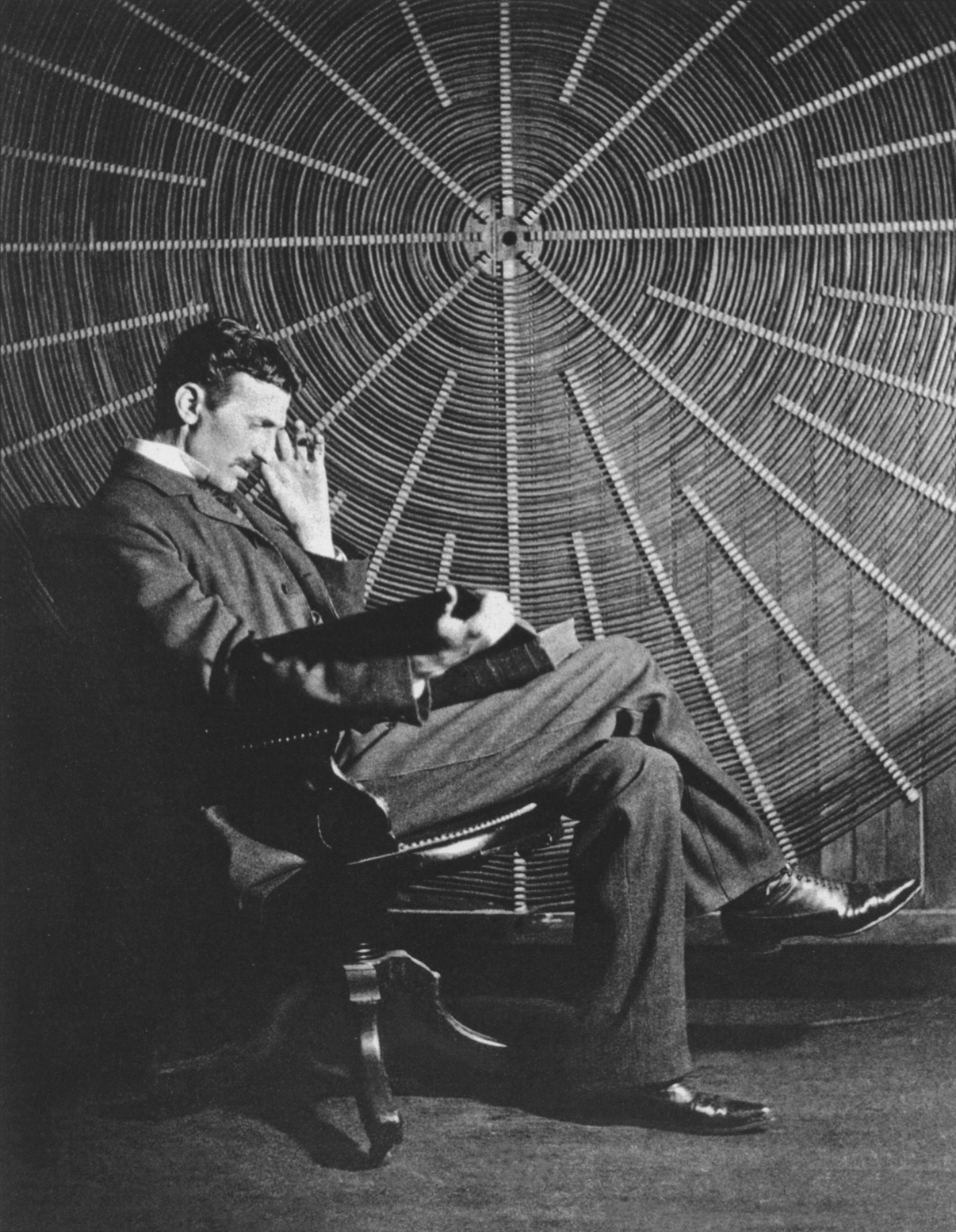
Dreams of a Mad Scientist

 
This weekend in Philadelphia, the Tesla Science Foundation is hosting its annual Nikola Tesla Energy Independence Celebration to commemorate the birthday of the influential inventor and his prolific contributions to science and technology. The event, according the foundation's press release, brings together scientists, inventors and enthusiasts for a three-day conference themed to highlight the need for a new energy paradigm.


Tesla turbine system


Tesla was a visionary inventor who lived during the turn of the 20th century. His achievements include the the discovery and development of radio, his experimentation with radiant energy of "invisible" kinds (later named X-rays), establishing the principles of frequency and power level for the first primitive radar units, the implementation of alternating current and the AC motor, wireless technology, and many other significant inventions that are commonplace aspects of the modern age.

Though ultimately stymied by jealous competing inventors and tyranical big business adversaries, Tesla's ideas have endured to the present day, perhaps being more relevant now than ever - especially his dream to bring clean, free energy to the world through advanced wireless technologies and similar concepts.

His extraordinary discoveries and designs related to this field are currently being utilized and researched by many scientists throughout the world, from electro-magnetic wave energy sources to wind turbine construction.

The greatness of his work, done with the betterment of humanity in mind, contrasts starkly with his own tragic personal life story, one of eventual isolation and exile from the world.


Tesla turbine.

Tesla alternating current motor.


The convention kicked off with a celebration "bash" Friday night at Philadelphia's Independence Center, a fitting site for the conference's "energy independence" theme. Lectures and other activities will be featured throughout the weekend at various locations, including a series of speaker forums at the Free Library of Philadelphia (no charge), a reception and dinner at Arch Street Meeting House ($20), and the official Tesla Foundation Conference at Two Liberty Place ($110 entrance fee). More info can be found at the Tesla Science Foundation website.--D.A. DeMers. 


Film short: Nikola Tesla - A Tribute to the Forgotten Wizard.
Enhanced by Zemanta